In France, a food supplement has to be notified before it goes on sale. Every ingredient gets checked: its status, the permitted plant part, the maximum accepted dose, the statements it requires on the label. Each European country has its own lists and its own notifications.
One trap among many
Neem: the fruit, yes. The leaf, no.
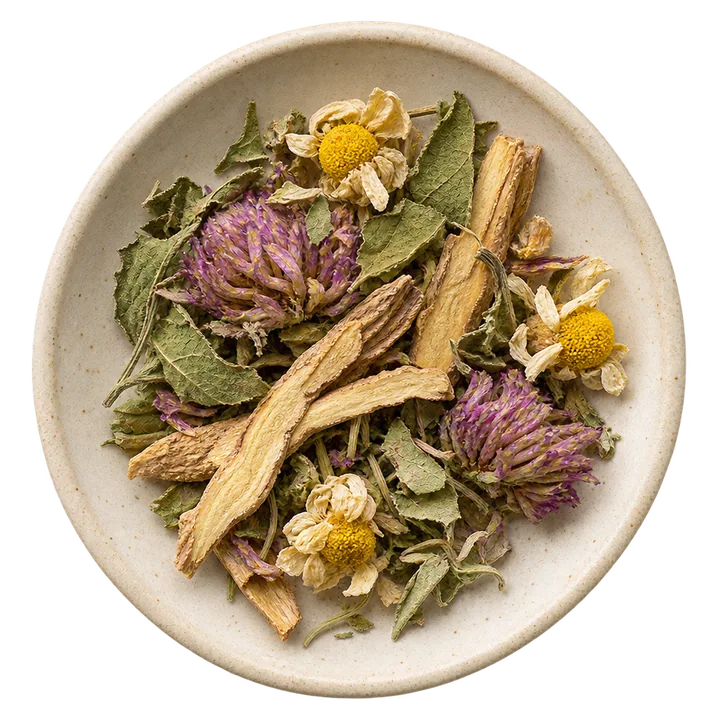
In France, neem (Azadirachta indica) is permitted in food supplements for its fruit. Its leaf is not. Same plant, two statuses: the plant part decides.
Fromtheformula,dosebydose,throughtothefiling.
For your project
The formula, dose by dose, checked for France and the countries you target.
The claims the formula allows, and the dose at which each one opens up.
Materials compared across several suppliers, form by form.
One brief sent to the shortlisted manufacturers, and quotes you can compare.
The print proof reviewed, mandatory statements word for word.
The certificate of analysis read before the batch ships.
The notification filed in your company’s name in every country that requires one. Elsewhere, the file the authority may ask for at inspection.
What you receive
A feasibility summary: what passes and what blocks, country by country.
Manufacturing quotes you can compare line by line.
A print proof reviewed before printing.
A product ready to go on the market, with its filings prepared.
Starting small
To start small, white label: a product from a manufacturer’s catalogue, under your brand. I compare the catalogues of several houses, and I check the lab’s formula before you buy it.
Number of contract manufacturers in my database who work in food supplements and state the label, counted on 8 November 2026.
Food supplements
00 / 06
Yoursupplement,stepbystep.
What I do, and the few moments when you step in.
01Scope
02Materials
03Checks
04Manufacturers
05Production
06Market
ScrollFood supplements
01 / 06
Food supplements · Scope
Scope
The right rules, the right countries
A supplement, a food, a cosmetic, a kibble: four sets of rules. And every country has its own laws and its own filings. That is the first thing I check.
On your own
a wrong call shows up late, and the formula or packaging has to be redone.
For the same vitamin C, at the same volume, I have seen prices vary threefold. I compare each form across several suppliers, and I work out the quantities so that no surplus surprises you on the invoice.
On your own
the wrong supplier, and a surplus you discover on the invoice.
I have 880+ contract manufacturers on file. For each project, I keep those that meet my criteria: compliance, rigour, ability to adapt. I write one brief, which each of them prices the same way.
On your own
weeks of searching and chasing, and quotes you cannot compare.
For a supplement, I file the notification in your company’s name, in every country that requires one. Where nothing is filed before sale, I put together the file the authority may ask for in an inspection. For as long as the contract runs, I watch the rules that affect your product.
On your own
the paperwork, then rules that change after launch, with no one to warn you.
The fee covers my work, from studying the project to market launch. Its firm amount is set by quote, after a first conversation. For the product, you have an estimate from that first conversation, then the written quote from the manufacturers I consult.
With private label, you take a formula from a manufacturer’s catalogue, under your brand. You start faster, with less money committed, but the formula is the lab’s: I check it before you buy it. With a custom formula, the formula is yours, dose by dose. The minimum quantity and the lead time go up.
What is a contract manufacturer?
A contract manufacturer makes a product for a brand that sells it under its own name. I have 620+ on file for food supplements, in France and elsewhere. I compare their quotes on one and the same specification.
From how many units?
With private label, one catalogue on file starts at a few dozen units. Custom, from 200 units*. I negotiate the minimum quantity with the manufacturer along with the formula, and before the quote, I tell you what you will pay for unused material.
* Depending on the dosage form, the packaging and the active ingredients you want. Orders of magnitude on file as of 8 November 2026.
How much does it cost to launch a supplement brand?
For 1,000 capsules in a bottle, count €4.50 to €7.50 excl. VAT per unit depending on the formula, so €4,500 to €7,500 excl. VAT. My fee comes on top, €1,000 to €3,000 excl. VAT depending on the complexity of the project, notification included. The authority’s fee, in the countries that charge one, is paid separately.
Indicative estimate: it is not a quote. The price is confirmed at the meeting.
How long does it take?
You have an estimate from the first conversation. The manufacturer’s written quote follows within one to two weeks for a formula already in production, two to four for a custom formula. Then allow three to four weeks of manufacturing for private label, three to twelve weeks for a custom formula, based on the manufacturers on file.